Most developers don’t think naming conventions matter — until they inherit a messy codebase.
Suddenly, inconsistent naming turns simple tasks into detective work. Variables look unfamiliar, APIs don’t align, and onboarding takes twice as long. What seemed like a minor stylistic choice becomes a real productivity problem.
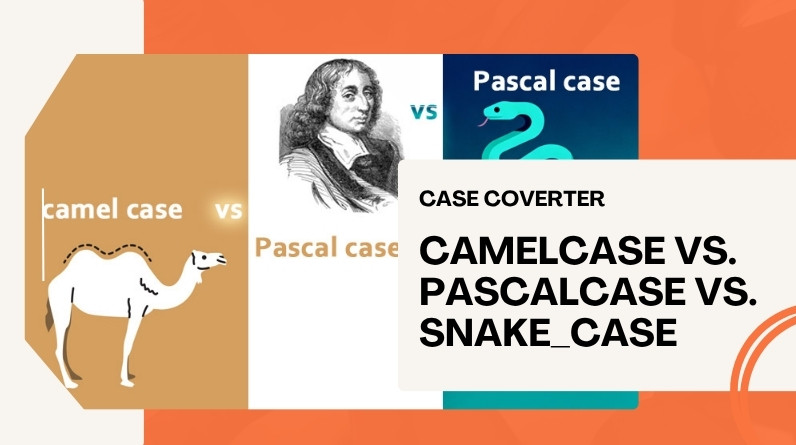
This guide breaks down camelCase, PascalCase, and snake_case in a practical way — so you don’t just understand them, but know exactly when and why to use each.
- Understand the differences between camelCase, PascalCase, and snake_case
- Learn where each convention is used in real-world projects
- See examples across languages and frameworks
- Get a decision framework for choosing the right style
- Avoid common mistakes that hurt readability and consistency
- Handle cross-stack naming conflicts (frontend, backend, database)
Why Naming Conventions Matter More Than You Think
Naming conventions are not just about style — they’re about communication. Every variable, function, and class name tells a story about what your code does.
Consistent naming reduces cognitive load. When developers recognize patterns instantly, they spend less time decoding and more time building. That’s a real productivity gain, especially on large or long-running projects.
How naming impacts team collaboration and scalability
In a team environment, inconsistent naming creates friction. One developer uses camelCase, another prefers snake_case, and suddenly the codebase feels fragmented — like a document edited by too many people with no shared style guide.
Strong naming conventions act like a shared language. They make collaboration smoother, reviews faster, and scaling more predictable — key principles in any solid case converter and coding standards approach.
Quick Comparison: camelCase vs. PascalCase vs. snake_case
Side-by-side comparison
| Convention | Format | Example | Common Usage |
|---|---|---|---|
| camelCase | firstWordSecondWord | userName | Variables, functions (JS, Java) |
| PascalCase | FirstWordSecondWord | UserName | Classes, components |
| snake_case | first_word_second_word | user_name | Python, databases |
Pattern breakdown
Instead of memorizing examples, focus on the pattern:
- camelCase → starts lowercase, uses capitals as separators
- PascalCase → every word starts with uppercase
- snake_case → lowercase words separated by underscores
Once you understand the pattern, you can apply it anywhere. For a broader look at how these formats fit into everyday text workflows, the guide on what a case converter is is a useful starting point.
camelCase Explained (With Real Usage Context)
Rules and structure
camelCase starts with a lowercase word, and each subsequent word begins with a capital letter. No separators, no spaces — just visual rhythm created by the uppercase letters themselves.
Where camelCase is used
It dominates modern programming, especially in:
- JavaScript
- TypeScript
- Java
- Go (for unexported, package-level identifiers)
Real-world examples
let userName = "John";
function calculateTotalPrice() {}
const isLoggedIn = true;
camelCase works well because it balances readability with compactness — no extra symbols, just visual cues. It’s worth noting that in Go, camelCase specifically signals that an identifier is unexported (private to its package), while PascalCase makes it public. That’s one of the few cases where naming convention carries compiler-level meaning.
PascalCase Explained (Beyond Just “Classes”)
Rules and structure
PascalCase capitalizes the first letter of every word, including the first one. It looks nearly identical to camelCase — the only difference is that opening uppercase letter.
Use cases
- Class names
- React components
- Interfaces and types
- Namespaces
- Exported identifiers in Go
Framework-specific examples
class UserProfile {}
function AppHeader() {}
interface UserData {}
PascalCase signals importance. When developers scan a file and see it, they instinctively recognize something structural — a class, a component, or a public API surface.
snake_case Explained (And Why It Dominates Python & Databases)
Rules and structure
snake_case uses lowercase letters with underscores separating words. It’s the most visually explicit of the three — every word boundary is marked, making long names easier to parse at a glance.
Use cases
- Python variables and functions
- Database tables and columns
- Configuration files
SCREAMING_SNAKE_CASE for constants
MAX_USERS = 100
API_KEY = "xyz"
snake_case prioritizes clarity over compactness. The explicit separation makes it highly readable, especially in data-heavy contexts where a misread variable name can cause real bugs.
When to Use Each Convention (Decision Framework)
Based on programming language
- JavaScript / TypeScript → camelCase (variables), PascalCase (classes)
- Python → snake_case (most cases)
- Java / C# → camelCase + PascalCase split
- Go → camelCase (unexported identifiers), PascalCase (exported)
Based on code element
- Variables / functions → camelCase
- Classes / components → PascalCase
- Constants → SCREAMING_SNAKE_CASE
- Database fields → snake_case
Based on team standards
If your team has a convention, follow it — even if it’s not your first preference. Consistency always beats personal style, and a slightly imperfect standard applied uniformly is better than a “correct” one applied inconsistently.
This principle is central to any well-structured clean code naming system.
Cross-Stack Naming Conflicts (Frontend vs Backend vs Database)
camelCase vs snake_case in APIs
A common real-world issue: the frontend uses camelCase, the backend uses snake_case, and the database uses snake_case too — but for different reasons.
Frontend: userName
Backend:  user_name
This mismatch creates friction when mapping data between systems, and it’s especially visible in REST APIs where JSON responses need to satisfy both client and server expectations simultaneously.
Best practices
- Use transformation layers (e.g., serializers, DTO mappers)
- Keep database naming separate from API responses
- Standardize API output format — many teams default to camelCase JSON regardless of backend language
Handling these differences cleanly is part of building scalable systems — not just writing clean code. Getting it right upfront saves a surprising amount of refactoring later.
Common Mistakes Developers Make
- Mixing multiple conventions in one file or project
- Ignoring language-specific standards
- Using PascalCase for variables accidentally
- Creating overly long or unclear names
These mistakes don’t break code — but they slow everyone down.
Refactoring Poor Naming Conventions (Step-by-Step)
Identify inconsistencies
Scan your codebase for mixed styles and unclear naming patterns. A quick grep or IDE search for specific patterns — like underscores in a camelCase project — can surface most issues fast.
Refactor safely
- Rename incrementally
- Use IDE refactoring tools
- Run tests after changes
Use tools
- Linters (ESLint, Pylint)
- Formatters (Prettier)
- Style guides
- Online converters — a snake_case converter or camelCase tool can speed up bulk renaming tasks during refactors
Automating naming rules ensures long-term consistency without relying on manual reviews.
Naming Conventions by Language (Quick Reference)
| Language | Variables | Classes | Constants |
|---|---|---|---|
| JavaScript | camelCase | PascalCase | SCREAMING_SNAKE_CASE |
| Python | snake_case | PascalCase | SCREAMING_SNAKE_CASE |
| Java | camelCase | PascalCase | SCREAMING_SNAKE_CASE |
| Go | camelCase | PascalCase | camelCase / PascalCase |
Best Practices for Choosing Naming Conventions
- Follow the ecosystem, not personal preference
- Optimize for readability, not brevity
- Stay consistent across the entire project
- Document your conventions clearly
Strong naming conventions are a foundational part of any scalable software development best practices framework.
FAQs
camelCase vs PascalCase — which should I use?
Use camelCase for variables and functions, PascalCase for classes and components.
Why does Python prefer snake_case?
It improves readability and aligns with Python’s official style guide (PEP 8).
Can I mix naming conventions in one project?
You can — but you shouldn’t. It creates inconsistency and confusion.
What’s the best naming convention for APIs?
camelCase is common for JSON APIs, but consistency across systems matters more than the choice itself.
Does naming convention affect performance?
No. Naming conventions impact readability and maintainability — not execution speed.
Conclusion
camelCase, PascalCase, and snake_case are more than stylistic choices — they’re tools for clarity, collaboration, and maintainability.
The right convention depends on your language, context, and team standards. But the real rule is simple: pick a convention, apply it consistently, and make your code easy to understand for whoever comes next.
If you want to take your code quality further, explore a structured coding standards system that helps enforce naming, formatting, and best practices across your entire project — tools like a case converter are a practical first step.
Leave a Reply