
Ever tried naming a variable like user profile data in code and watched it instantly break? That’s because programming languages don’t allow spaces — and without a clear structure, names quickly become unreadable.
This is exactly where snake_case comes in. It’s one of the most widely used naming conventions in programming, designed to make multi-word names readable, consistent, and easy to maintain.
But knowing what snake_case is isn’t enough. To use it effectively, you need to understand when to use it, when to avoid it, and how it compares to other naming styles. That’s what this guide covers.
- What snake_case means and how it works
- Simple and real-world examples
- Where snake_case is commonly used
- When you should (and shouldn’t) use it
- How it compares to other naming conventions
- Common mistakes and best practices
What Is snake_case? (Definition + Breakdown)
snake_case is a naming convention where multiple words are written in lowercase and separated by underscores (_).
Instead of writing:
userprofiledata
You write:
user_profile_data
Key Characteristics
- All letters are lowercase
- Words are separated by underscores
- No spaces are used
Common Variations
- lower_snake_case → used for variables and functions
- UPPER_SNAKE_CASE → used for constants (also called SCREAMING_SNAKE_CASE)
This structure improves readability by visually separating words — something the brain processes faster than a continuous string of characters. In fact, research has found that readers tend to recognize snake_case values more quickly than camelCase, likely because the underscores create natural word boundaries.
Examples of snake_case (From Basic to Real-World)
Beginner Examples
- first_name
- user_id
- email_address
Intermediate Examples
- calculate_total_price
- get_user_profile
- validate_input_data
Real-World Examples
- API JSON: user_account_status
- Database column: order_created_at
- File name: monthly_sales_report_2026.csv
These examples highlight something worth noting: snake_case isn’t just for beginners — it appears heavily in production systems where clarity and consistency matter most. If you need to convert text into this format instantly, the snake_case converter tool handles it in one click.
Why snake_case Is Used (Beyond the Basics)
1. Readability That Scales
Underscores create clear visual separation between words. This makes long names significantly easier to scan compared to something like useraccounttransactionhistory, where there’s no visual cue to guide the eye.
2. Consistency Across Teams
In collaborative projects, consistent naming reduces confusion. When everyone follows the same convention, code becomes easier to understand and maintain — regardless of who originally wrote it.
3. Maintainability in Large Codebases
As projects grow, naming clarity becomes critical. snake_case helps ensure that function and variable names remain understandable months (or years) later, without needing extra context to decode them.
If you’re exploring broader naming conventions in programming, snake_case is one of the foundational styles every developer should understand.
When to Use snake_case (Decision-Based Guide)
Python (Standard Practice)
In Python, snake_case is the default convention for naming variables, functions, and modules. It’s not optional — it’s the expected standard, outlined in PEP 8, Python’s official style guide.
Rust
Rust enforces snake_case for variables and function names at the compiler level. Using a different convention will trigger a warning, making consistency non-negotiable in this language.
Databases
Snake case is widely used for table and column names:
- user_accounts
- transaction_history
It keeps database schemas readable and consistent, especially in large data models with dozens of related tables.
APIs and JSON
Many APIs use snake_case for keys:
- user_id
- last_login_time
This improves clarity when data is exchanged between systems, and it’s especially common in Python-based backends like Django REST Framework and FastAPI.
File Naming
Snake case is a solid choice for file names because it avoids spaces, plays well across operating systems, and stays readable at a glance:
- project_documentation_v2.pdf
Understanding where each naming style fits is part of mastering code style best practices across different environments.
When NOT to Use snake_case
JavaScript and Java
These languages typically use camelCase for variables and functions:
- userProfile
Class Names
Most languages prefer PascalCase for classes:
- UserProfile
URLs
Kebab-case is more common in URLs and is generally preferred by search engines:
- user-profile
Using the wrong convention in the wrong context doesn’t just look inconsistent — it can signal a lack of familiarity with a language’s ecosystem, which matters in code reviews and team settings.
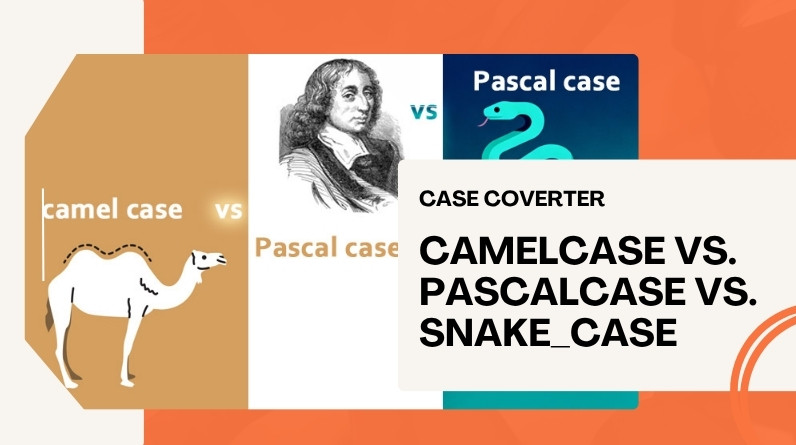
snake_case vs Other Naming Conventions
| Convention | Example | Common Use |
|---|---|---|
| snake_case | user_profile | Python, Rust, databases |
| camelCase | userProfile | JavaScript, Java |
| PascalCase | UserProfile | Class names |
| kebab-case | user-profile | URLs, CSS |
The key takeaway: there’s no universal “best” style — only the right style for the context. For a broader breakdown of how these conventions compare, this guide to case types and converters covers each format in detail.
Common Mistakes When Using snake_case
- Mixing styles: user_profileData
- Inconsistent naming: user_data vs userData in the same codebase
- Overly long names: user_account_transaction_history_log_file
- Misusing uppercase: using UPPER_SNAKE_CASE for non-constants
- Leading or trailing underscores: _user_id or user_id_ — these carry specific meanings in many languages (often denoting private or machine-generated identifiers) and should not be used in standard snake_case names
These mistakes chip away at readability — the exact problem snake_case is designed to solve.
Best Practices for Using snake_case Effectively
- Keep names descriptive but concise
- Stay consistent across your entire project — not just within a single file
- Use UPPER_SNAKE_CASE only for constants
- Handle edge cases carefully (e.g., user_id not userid)
- Avoid leading or trailing underscores unless the language convention specifically calls for them
- Follow language-specific style guides (PEP 8 for Python, Rust’s compiler warnings, etc.)
Strong naming habits are a core part of clean code and align with the broader programming naming conventions used across modern development.
Real-World Use Cases in Modern Development
Python Frameworks
Frameworks like Django and FastAPI rely heavily on snake_case for function and variable names — it’s baked into how these ecosystems are structured, from URL routing to serializer fields.
Data Engineering
Data pipelines — whether built in Python, SQL, or tools like dbt — use snake_case extensively for consistency across datasets, transformations, and column references. A single naming inconsistency in a pipeline can cause hard-to-trace bugs downstream.
Backend Systems
APIs, logs, and configuration files frequently use snake_case to maintain readability across systems. When a backend is Python-based and the database schema is also snake_cased, the entire stack stays aligned without awkward mapping layers.
In these environments, naming clarity isn’t just helpful — it’s essential for collaboration and debugging.
FAQs About snake_case
What is snake_case used for?
It’s used to name variables, functions, database fields, API keys, and files in a readable and consistent way — particularly in Python, Rust, and SQL-based environments.
Is snake_case better than camelCase?
Not universally. It depends on the programming language and context. Python developers use snake_case; JavaScript developers default to camelCase. The “better” convention is whichever one your language and team have standardised on.
Why is it called snake_case?
The underscores create a visual shape resembling a snake’s body — low, flat, and connected. The term first appeared in the Ruby community around 2004.
Can snake_case be used in JavaScript?
Technically yes, and it will run without errors — but camelCase is the widely accepted convention. Mixing styles in a JavaScript codebase is generally discouraged.
Conclusion: When Should You Use snake_case?
snake_case is one of the most practical and readable naming conventions in programming. It’s especially valuable in Python, Rust, databases, and APIs — where clarity and consistency matter most.
The key isn’t just knowing what snake_case is, but understanding when it fits and when it doesn’t. Choosing the right naming convention improves readability, reduces errors, and makes your code easier to maintain long after it’s written.
If you want a broader understanding of how snake_case fits into modern development, explore complete naming convention strategies to build cleaner, more consistent codebases.

Leave a Reply